
When Christmas Feels Heavy: Understanding Stress, Guilt and Loneliness at This Time of Year
Christmas is meant to be joyful, isn’t it? That’s what everyone says. But if you’re reading this, I suspect you might be feeling something quite different right now. Perhaps you’re exhausted before the day even arrives. Perhaps you’re wondering why everyone else seems to be coping brilliantly while you feel like you’re barely holding it together. Perhaps there’s a voice in your head telling you that you should be feeling festive, grateful, excited—and the fact that you don’t makes you wonder what’s wrong with you.
I want you to know something: there is nothing wrong with you.
The Weight of “Supposed To”
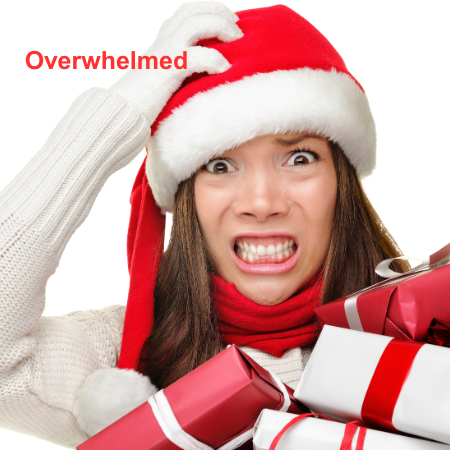
At Christmas, those negative thoughts can become louder, can’t they? The ones that tell you you’re not doing enough. That you’re letting people down. That everyone else has their lives sorted while you’re struggling. These thoughts often come from a place of exhaustion and overwhelm, not from truth.
You might be trying to keep up with expectations—ones you’ve set for yourself or ones you believe others have of you. You might be pouring everything into making sure everyone else is happy, all while feeling completely drained underneath. And then comes the guilt. Guilt for not feeling festive. Guilt for wanting a break. Guilt for not being able to provide the “perfect” Christmas. Guilt for even having these feelings at all.
If that guilt is sitting heavy in your chest right now, I need you to hear this: guilt doesn’t mean you’re failing. It means you care deeply, and you’re stretched far too thin.
When the Season Brings Everything to the Surface
Let me share something with you about Tom (not his real name, and some details have been changed to protect his privacy).
Tom manages life fairly well most of the year. He works hard, raises his children, keeps things steady. But every December, something shifts. As Christmas approaches, the stress rises like a tide he can’t hold back. He wants to make the day special for his family—of course he does—but alongside that desire comes the weight of buying gifts, organizing everything, making sure everyone else is happy. And somewhere in all of that, Tom disappears.
When Tom and I first spoke about this, he told me he felt guilty. Guilty for being tired when he “should” be energized. Guilty for not feeling excited when everyone around him seemed full of joy. Guilty for worrying about money. Guilty for the resentment that was quietly building because he never got a moment to himself.
And then he said something that so many people feel but rarely voice: “I’m surrounded by people, but I feel completely alone in keeping everything going.”
Tom thought these feelings meant something was wrong with him. But as we explored it together, he began to see that Christmas was bringing old feelings to the surface—past memories, old expectations, patterns of trying to please everyone while his own needs went unnoticed. Once Tom understood that his reactions made complete sense given what he was carrying, the shame began to lift. He started taking small steps to lower the pressure he was putting on himself and to let his needs matter too.
If you see yourself in Tom’s story, you’re not alone. Christmas has a way of highlighting emotions that sit quietly in the background all year.
Why Your Anxiety Spikes at Christmas
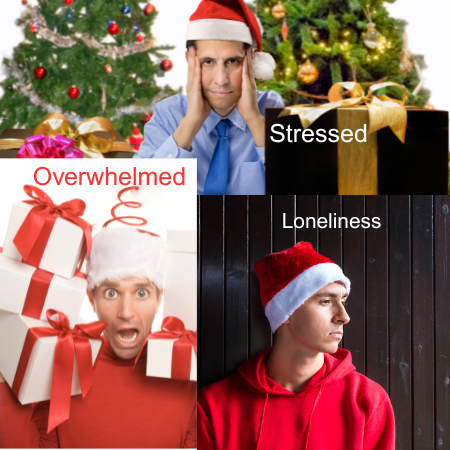
There are so many unspoken rules at Christmas, aren’t there? Be cheerful. Be grateful. Be giving. Be organised. Be everything for everyone. When you’re already struggling with anxiety or feeling low about yourself, these expectations can feel impossible. Every task becomes evidence that you’re not measuring up. Every moment you don’t feel “right” becomes another reason to criticise yourself.
Your guilt might be showing up because:
- You feel you’re not doing enough (even though you’re doing far more than you realize)
- You can’t provide what you believe others expect
- You don’t feel festive when it seems like everyone else does
- You feel lonely even when you’re surrounded by people
- You’re carrying practical stress, emotional weight, or financial worry or all three
- That voice in your head keeps telling you that you’re getting it all wrong
None of this means you’re failing. It means you’re human, and you’re doing your very best with what you have right now.
When Resentment Creeps In
Perhaps you’ve noticed resentment building. That quiet anger that you don’t feel you’re allowed to have. You might not even want to admit it to yourself because it feels wrong to resent Christmas, to resent the people you love, to resent having to keep going when you’re running on empty.
But here’s what I want you to understand: resentment doesn’t mean you don’t care. It’s not a character flaw. It’s usually a signal that you need rest, that you need understanding, that you need more balance in your life. When your emotional reserves are depleted, even small pressures can feel enormous. When you recognize this, you can respond with compassion toward yourself rather than more criticism.
The Loneliness No One Talks About
Loneliness at Christmas is far more common than you might think. You can be in a room full of people and still feel utterly alone. Sometimes the season simply highlights what’s missing more than what’s present. It might be a lack of support. A lack of real connection. Or simply the weight of carrying everything on your own while everyone assumes you’re fine.
If you’re feeling lonely right now, it doesn’t mean there’s something wrong with you. It often means your emotional needs have been overlooked for a long time—sometimes by others, and sometimes by yourself. You’ve become so used to taking care of everyone else that you’ve forgotten you need care too.
How to Be Gentler with Yourself This Season
I’m not going to give you a long list of things to do, that’s probably the last thing you need.
But I do want to offer you some permission.
Permission to notice your limits. There’s no rule that says you must do everything. Sometimes, small is enough. Sometimes, less is actually more.
Permission to lower your expectations. You don’t need to create a perfect day. You never did. Good enough is truly enough.
Permission to rest. Even fifteen minutes of quiet can help your nervous system find its way back to calm. You’re allowed to stop moving for a moment.
Permission to be honest. If you have someone who understands—a friend, a partner, a counsellor—being honest about how you’re really feeling can ease the pressure you’ve been carrying alone.
Permission to be kind to yourself about guilt and resentment.
They’re signals of your emotional load, not signs that you’re a bad person. They’re showing you that you need support, not that you need to try harder.
And if those negative thoughts start telling you that you don’t deserve any of this? That’s anxiety speaking, not truth. You deserve kindness. You deserve rest. You deserve to have your feelings acknowledged, including the difficult ones.
You’re Not On Your Own
If the Christmas season is feeling particularly heavy, please know that support is available. You don’t have to carry this alone, and you don’t have to wait until you’re in crisis to reach out.
Samaritans – Open every day, including Christmas Day
Call: 116 123 | Email: jo@samaritans.org | Website: samaritans.org
Shout Text Support – For moments of panic, stress, worry or overwhelm
Text: SHOUT to 85258
Mind Infoline – For mental health information, guidance and support options
Call: 0300 123 3393 | Text: 86463 | Email: info@mind.org.uk
NHS 111 – If you feel unable to cope or need urgent mental health help
Call: 111 and choose the mental health option
Campaign Against Living Miserably (CALM) – For loneliness, overwhelm or emotional distress
Call: 0800 58 58 58 | Webchat: thecalmzone.net
The Silver Line – A helpline for older adults who feel lonely or isolated
Call: 0800 4 70 80 90
These services are there to help you feel less alone, especially when the season brings up more emotion than you expected. Reaching out isn’t weakness—it’s wisdom. It’s recognizing that you matter, and that you deserve support.
You’re doing better than you think you are. Even if it doesn’t feel like it right now, you are enough. Exactly as you are.